Image: <a href="https://commons.wikimedia.org/wiki/File:Our_(Almost_Traditional)_Thanksgiving_Dinner.jpg" rel="nofollow noopener" target="_blank">Ms Jones from California, USA / Wikimedia Commons</a> (CC BY 2.0)
From the 1621 harvest feast to Lincoln’s national holiday — a balanced, kid-friendly look at Thanksgiving’s history.
Every year on the fourth Thursday of November, families across the United States gather for Thanksgiving. Here’s how the holiday came to be.
The 1621 harvest celebration
In 1621, English colonists at Plymouth, now known as Pilgrims, held a harvest celebration that lasted several days. Members of the Wampanoag nation, led by Massasoit, also attended. The Wampanoag had lived in the region for thousands of years.
More than one story
Historians remind us that relationships between colonists and Native peoples were complex and later grew painful, with loss of land and lives. Many Native Americans today observe the day with reflection. Learning these perspectives helps kids understand history more fully.
Becoming a national holiday
- Writer Sarah Josepha Hale campaigned for years for a national day of thanks.
- In 1863, during the Civil War, President Abraham Lincoln proclaimed a national Thanksgiving Day.
- In 1941, Congress set it as the fourth Thursday in November.
Traditions today
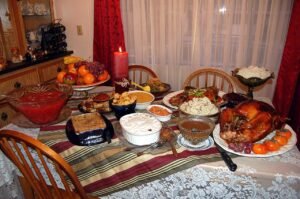
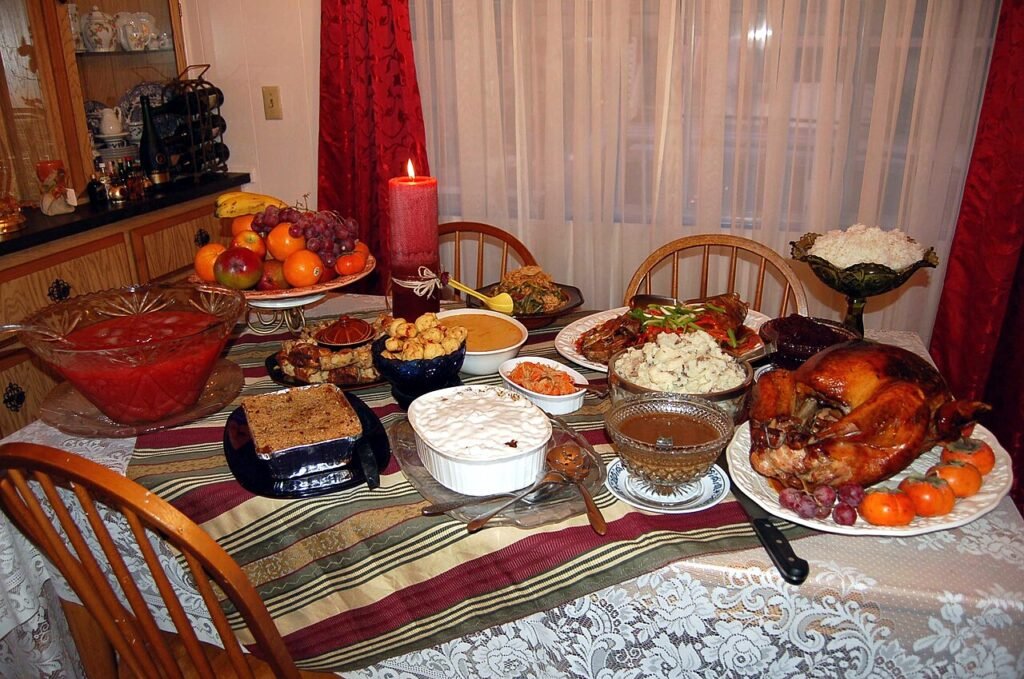
Turkey, stuffing and pumpkin pie, the Macy’s parade, football, volunteering at food banks — and, for many immigrant families, adding dishes from their own cultures to the table.
A gratitude activity
Cut paper leaves and have each family member write one thing they’re thankful for. Hang them on a “gratitude tree.”
The bottom line
At its heart, Thanksgiving is about gratitude, sharing and remembering history honestly.
Vocabulary
| Word | Pronunciation | Meaning |
|---|---|---|
| harvest | HAR-vist | gathering of crops |
| colonist | KOL-uh-nist | settler in a new land |
| Wampanoag | wahm-puh-NOH-ag | Native nation of southeastern Massachusetts |
| perspective | per-SPEK-tiv | point of view |
| proclaim | proh-KLAYM | to announce officially |
| campaign | kam-PAYN | to work hard for a cause |
| tradition | truh-DISH-un | custom passed down |
| gratitude | GRAT-ih-tood | thankfulness |
Image: Ms Jones from California, USA / Wikimedia Commons (CC BY 2.0)
✍️ Have a story or article to share? Submit it for review and get published on Srikaram.org.