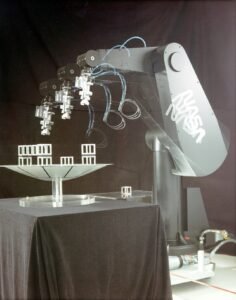
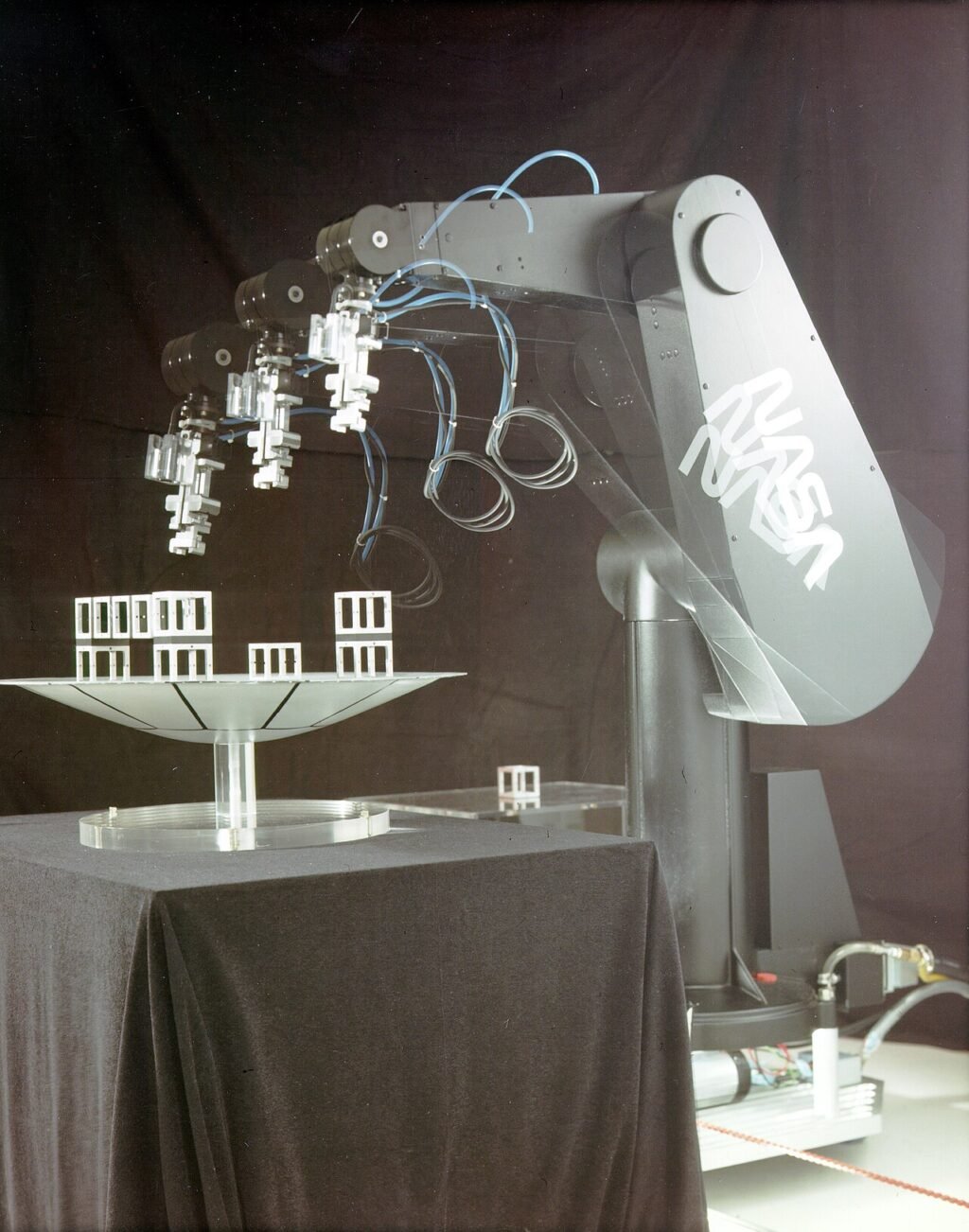
Image: <a href="https://commons.wikimedia.org/wiki/File:Puma_Robotic_Arm_-_GPN-2000-001817.jpg" rel="nofollow noopener" target="_blank">NASA / Dominic Hart / Wikimedia Commons</a> (Public domain)
見る・考える・動く――ロボットの3つのしくみを、身近な例でわかりやすく説明します。
English Summary
This Japanese article explains how robots work using three parts: sensors that “see” and “feel” the world (cameras, distance sensors, touch sensors), a computer “brain” that follows a program to decide what to do, and motors or actuators that move. It uses examples like robot vacuum cleaners and factory robots, and encourages kids to try simple programming and robot kits.
This article is written in Japanese (日本語).
おそうじロボット、工場で働くロボット、火星を走る探査車――ロボットはいろいろな所で活やくしています。どうやって動いているのでしょう?
ロボットの3つのしくみ
1. センサー(感じる)
人間の目や耳、皮ふのように、まわりのようすを調べます。カメラ、きょりをはかるセンサー、ぶつかったことを感じるセンサーなどがあります。
2. コンピューター(考える)
ロボットの「頭脳」です。プログラムという命令にしたがって、センサーの情報から次に何をするか決めます。
3. モーター(動く)
タイヤを回したり、うでを曲げたりして、実際に動きます。
おそうじロボットの例
- センサーで壁や段差を見つける。
- コンピューターが「右に曲がろう」と決める。
- モーターでタイヤを回して方向を変える。
やってみよう
子ども向けのプログラミングアプリやロボットキットを使えば、自分でロボットに命令を出すことができます。
まとめ
「感じる・考える・動く」――このしくみがわかれば、未来のロボットエンジニアへの第一歩です。
Vocabulary
| Word | Pronunciation | Meaning |
|---|---|---|
| ロボット | robotto | robot |
| センサー | sensā | sensor |
| 頭脳 | zunō | brain |
| プログラム | puroguramu | program |
| 命令 | meirei | command |
| モーター | mōtā | motor |
| 探査車 | tansasha | rover |
| 段差 | dansa | step / ledge |
Image: NASA / Dominic Hart / Wikimedia Commons (Public domain)
✍️ Have a story or article to share? Submit it for review and get published on Srikaram.org.