Image: <a href="https://commons.wikimedia.org/wiki/File:Castle_Himeji_sakura02.jpg" rel="nofollow noopener" target="_blank">Unknown / Wikimedia Commons</a> (CC BY-SA 3.0)
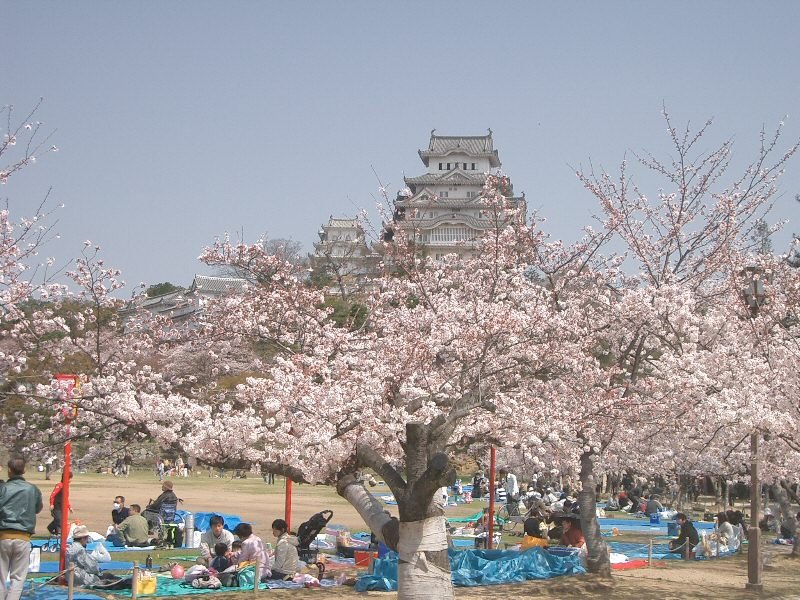
Every spring, something magical happens in Japan. Almost overnight, the bare branches of cherry trees burst into clouds of pale pink and white blossoms. Parks, riversides, temple gardens and school grounds are transformed into tunnels of flowers. Petals drift through the air like snow and float on the surface of rivers. Families, friends and coworkers spread blue picnic sheets beneath the trees, sharing food, laughter and the view. This beloved tradition is called hanami, which means “flower viewing.”
Cherry blossoms, called sakura in Japanese, are one of the most important symbols of Japan. They appear in art, poetry, music, festivals, school ceremonies and even on coins. In this article, we will explore the history of hanami, the science of the cherry blossom forecast, how people celebrate, and the deep cultural meaning behind these delicate flowers.
What Are Sakura?
Sakura are the blossoms of ornamental cherry trees. Most do not produce the cherries we eat; they are grown for their beautiful flowers. Japan has hundreds of varieties of cherry trees. The most common is the Somei Yoshino, a variety with pale pink, almost white, five-petaled flowers. It was developed in the 1800s in the Edo period, in a village called Somei, now part of Tokyo, and was planted widely across the country.
Other varieties include:
- Yamazakura (mountain cherry): A wild variety that grows in the mountains.
- Shidarezakura (weeping cherry): With branches that hang down like a waterfall of flowers.
- Yaezakura (double-flowered cherry): With fluffy blossoms that have many layers of petals and bloom a little later.
- Kawazuzakura: A deep pink variety that blooms early, in February.
A Short Season
What makes cherry blossoms so special is how quickly they come and go. The blossoms of a single tree typically stay at full bloom for only about a week. A strong wind or heavy rain can scatter the petals even sooner. This brief moment of beauty is part of what makes hanami so meaningful.
The History of Hanami
From Plum to Cherry
Flower viewing in Japan began more than a thousand years ago. During the Nara period (710–794), Japanese nobles were influenced by Chinese culture, and they admired plum blossoms (ume), which were popular in China. Over time, especially during the Heian period (794–1185), the focus shifted to the native cherry blossoms.
The emperor and his court held elegant flower-viewing parties where they wrote poetry, played music and admired the blossoms. In the classic Japanese literature of this period, such as The Tale of Genji, written by the noblewoman Murasaki Shikibu, cherry blossom parties appear as moments of beauty and emotion.
Samurai and Shoguns
Later, samurai warriors also embraced the cherry blossom. In 1598, the powerful warlord Toyotomi Hideyoshi held a famous, lavish hanami party at Daigo-ji Temple in Kyoto, inviting around 1,300 guests. Daigo-ji still holds a festival in memory of that event.
Hanami for Everyone
During the Edo period (1603–1868), hanami spread from nobles and samurai to ordinary people. The shogun Tokugawa Yoshimune had cherry trees planted along riverbanks and in public spaces, such as Asukayama in Edo (now Tokyo), so that common people could enjoy the blossoms. Townspeople began to picnic under the trees with food and music, and the tradition became a joyful public celebration.
The Sakura Forecast
Because the blooming season is so short, people in Japan follow the sakura forecast closely. Weather agencies and companies track temperatures and observe special sample trees to predict when the blossoms will open in each city.
The blooming moves like a wave across the country, known as the sakura zensen, or “cherry blossom front.” It typically begins in the warm southern islands of Okinawa as early as January, reaches cities like Fukuoka, Kyoto and Tokyo in late March or early April, and arrives in the cool northern island of Hokkaido in late April or May.
News programs report on the forecast every day during the season, and people plan their picnics, trips and festivals around it.
How People Celebrate Hanami
Picnics Under the Trees
The most popular way to enjoy hanami is a picnic. People spread out blue or colorful plastic sheets under the trees. In popular parks, the best spots fill up quickly, so sometimes one person, often a junior employee in a company group, arrives early in the morning to save a space for the group.
Hanami picnics include delicious foods, such as:
- Bento boxes: Lunch boxes with rice, vegetables, fish, meat and pickles beautifully arranged.
- Onigiri: Rice balls wrapped in seaweed, filled with salmon, pickled plum or tuna.
- Hanami dango: Sweet rice dumplings on a skewer in three colors: pink, white and green. The colors are said to represent spring cherry blossoms, the lingering snow of winter and the fresh green of summer.
- Sakura mochi: Pink rice cakes filled with sweet red bean paste and wrapped in a salted, pickled cherry leaf.
Yozakura: Night Viewing
Some people enjoy yozakura, “night cherry blossoms.” Parks and castles hang paper lanterns called chōchin or use lights to illuminate the trees. The glowing blossoms against the dark sky create a dreamy, magical atmosphere. Reflections of lit cherry trees in castle moats and rivers are especially beautiful.
Festivals
Many towns hold sakura matsuri, cherry blossom festivals, with food stalls, music, dance performances, tea ceremonies and boat rides.
Sakura in School Life
In Japan, the school year and the business year begin in April, right around the time of the cherry blossoms. That means many important life moments, such as graduation ceremonies, starting first grade, entering a new school or beginning a first job, happen beneath blooming sakura. For many Japanese people, cherry blossoms are connected to memories of new beginnings, farewells and growing up.
The Meaning of the Cherry Blossom
Mono no Aware
Cherry blossoms are closely linked to a Japanese idea called mono no aware, which can be translated as “the pathos of things” or “a gentle sadness at the passing of things.” It describes the feeling we have when we see something beautiful and know it will not last.
Because cherry blossoms bloom brightly and fall quickly, they remind people that life is precious and temporary. Instead of making people gloomy, this feeling encourages them to appreciate the present moment and the people around them.
Renewal and Hope
Sakura also symbolize spring, renewal, hope and fresh starts. After a cold winter, the first blossoms bring joy and energy.
Sakura Flavors
During spring, Japanese stores fill with sakura-flavored treats. You might find sakura ice cream, sakura cookies, sakura tea, sakura chocolate and pink sakura drinks. Cherry blossom petals and leaves are sometimes pickled in salt and used to add a delicate floral flavor. Sakurayu is a tea made by placing a salted cherry blossom in hot water, where it gently opens like a flower. It is often served at weddings and celebrations.
Famous Places for Hanami in Japan
- Ueno Park, Tokyo: One of the most popular hanami spots in the capital, with over a thousand cherry trees.
- Chidorigafuchi, Tokyo: A moat near the Imperial Palace where people rent rowboats to glide beneath the blossoms.
- Philosopher’s Path, Kyoto: A peaceful stone path along a canal lined with cherry trees.
- Mount Yoshino, Nara: A mountain covered with tens of thousands of cherry trees, famous for centuries.
- Hirosaki Castle, Aomori: Known for its castle moat filled with fallen petals, creating a “pink carpet” on the water.
- Himeji Castle, Hyōgo: A gleaming white castle surrounded by blossoms.
Cherry Blossoms Around the World
Japan has shared its love of cherry blossoms with the world. In 1912, the mayor of Tokyo gave thousands of cherry trees to the United States as a gift of friendship. They were planted around the Tidal Basin in Washington, D.C., where the National Cherry Blossom Festival now attracts more than a million visitors every spring. Cherry trees from Japan have also been planted in cities such as Vancouver, Toronto, Paris, Bonn and New Delhi.
Hanami Etiquette
- Don’t pick flowers or shake branches; let everyone enjoy them.
- Take your trash home or use designated bins.
- Keep noise reasonable, especially near homes and temples.
- Respect “no picnic” areas.
Fun Facts for Kids
- The Japan Meteorological Agency uses specific “sample trees” in each city to officially declare when cherry blossoms open.
- The 100-yen coin features cherry blossoms.
- Some cherry trees in Japan are more than a thousand years old.
Discussion Questions for Parents and Teachers
- Why do you think short-lived things, like cherry blossoms, can feel especially beautiful?
- How might the cherry blossom season make new beginnings feel special?
- What signs of spring do you notice where you live?
- How could your family create its own “flower viewing” tradition?
Conclusion
Hanami is more than looking at flowers. It is a celebration of spring, friendship and the beauty of fleeting moments. Beneath clouds of pink blossoms, people in Japan pause their busy lives to share food, laughter and quiet wonder. The cherry blossom teaches a gentle lesson for all of us: enjoy the present, cherish the people around you, and notice the beauty that surrounds you, before the petals fall.
Image: Unknown / Wikimedia Commons (CC BY-SA 3.0)
✍️ Have a story or article to share? Submit it for review and get published on Srikaram.org.