Image: <a href="https://commons.wikimedia.org/wiki/File:Baguettes,_Paris,_France_-_panoramio.jpg" rel="nofollow noopener" target="_blank">Nick Thweatt / Wikimedia Commons</a> (CC BY-SA 3.0)
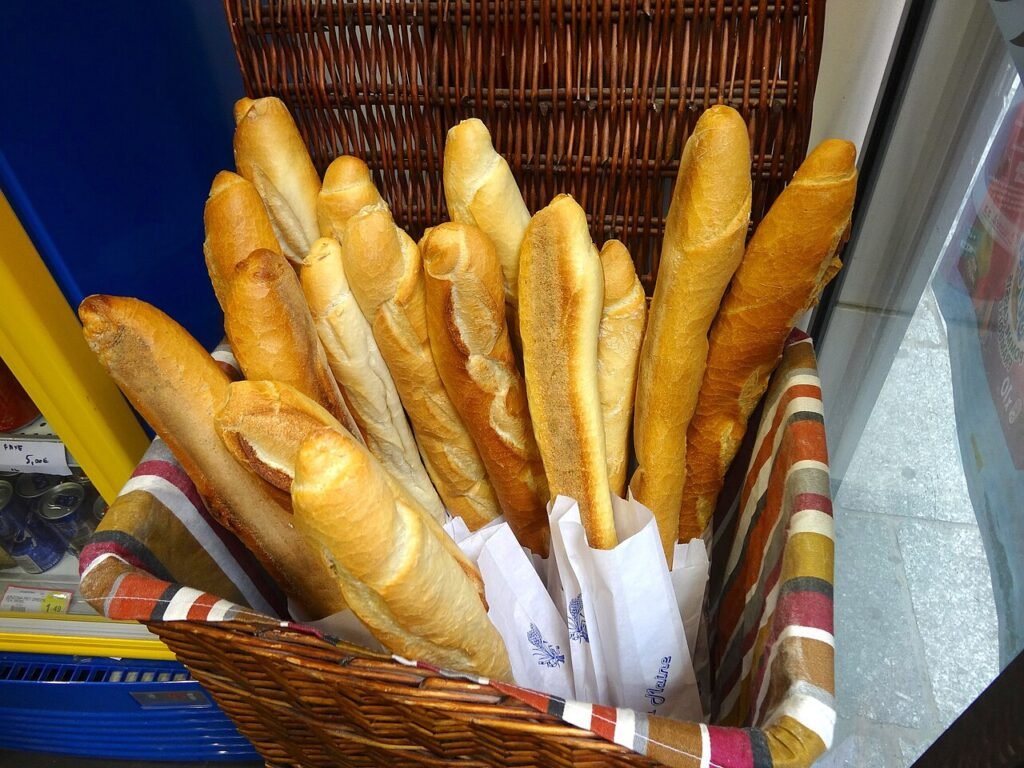
Walk down almost any street in France early in the morning and you will smell it: warm, crusty bread fresh from the oven. People line up at the local boulangerie (bakery), and many walk home with a long, golden baguette tucked under their arm, often nibbling the crunchy tip before they arrive. In France, food is not just fuel. It is a source of pride, a daily ritual and an art form that brings families and friends together.
French cuisine is so important to the country’s identity that UNESCO has recognized it twice. In 2010, the gastronomic meal of the French was added to the list of Intangible Cultural Heritage of Humanity. In 2022, the artisanal know-how and culture of baguette bread received the same honor. In this article, we will explore what makes French food culture special, from bakeries and markets to cheese, pastries, regional dishes and the customs of the French table.
The Mighty Baguette
The baguette is a symbol of France around the world. It is long and thin, with a crisp, crackly crust and a soft, airy inside. A traditional baguette is made from only four ingredients: flour, water, salt and yeast. The skill of the baker, known as a boulanger, makes all the difference.
French people buy millions of baguettes every day. Many families buy fresh bread daily, because a baguette is best eaten on the day it is baked. There is even a special type called the baguette de tradition, which by law must be made without additives.
Every year, Paris holds a contest for the best baguette in the city. The winning baker receives a prize and the honor of supplying bread to the Élysée Palace, the home of the French president, for a year.
Bread is part of nearly every meal in France. It is used to push food onto the fork and to wipe up delicious sauce from the plate, a habit sometimes called faire saucette. Bread is usually placed directly on the tablecloth, not on a side plate.
Boulangeries and Pâtisseries
In France, a boulangerie specializes in bread, while a pâtisserie specializes in pastries and cakes. Many shops do both. Some of the most popular treats include:
- Croissant: A flaky, buttery crescent-shaped pastry made by folding butter into dough many times to create thin layers. Although the croissant has roots in Austria’s kipferl, France perfected it.
- Pain au chocolat: A rectangular pastry with sticks of dark chocolate inside. In parts of southwestern France, people call it a chocolatine, and the friendly debate over the correct name is famous.
- Éclair: A long pastry filled with cream and topped with chocolate or coffee icing.
- Macaron: A colorful, delicate sandwich cookie made with almond flour and filled with ganache or cream.
- Tarte aux fraises: A strawberry tart with custard filling.
- Mille-feuille: Meaning “a thousand leaves,” a dessert made of layers of puff pastry and cream.
- Madeleine: A small, shell-shaped sponge cake.
- Crêpes: Thin pancakes, originally from Brittany, served with sugar, chocolate spread, jam or savory fillings.
The French Meal: A Ritual
For French families, meals are an important time to be together. Many people still sit down for long meals, especially on weekends and holidays. The UNESCO recognition of the French gastronomic meal describes a festive meal with a particular structure:
- Apéritif (apéro): Drinks and small snacks before the meal.
- Entrée: In France, the “entrée” is the starter, not the main course. It might be a salad, soup or pâté.
- Plat principal: The main dish, often meat or fish with vegetables.
- Fromage: A cheese course, served with bread.
- Dessert: A sweet finish, such as a tart, mousse or crème brûlée.
- Café: A small cup of strong coffee.
Meals emphasize good-quality ingredients, pairing food with drinks, beautiful table settings and lively conversation. Eating slowly and enjoying the company is just as important as the food itself.
A Nation of Cheese
France is famous for its cheese. There are hundreds of varieties, and a former French president, Charles de Gaulle, is often quoted as joking about how difficult it is to govern a country with so many kinds of cheese. Some favorites include:
- Camembert from Normandy, soft and creamy.
- Brie, from the region near Paris.
- Roquefort, a blue cheese aged in natural caves in southern France.
- Comté, a firm, nutty cheese from the Jura mountains.
- Chèvre, goat’s milk cheese.
Many French cheeses, wines and foods carry a special label called AOC or AOP, which guarantees that they come from a specific region and are made using traditional methods.
Markets: The Heart of the Neighborhood
Most French towns have an open-air marché, held one or more days a week. Farmers, cheesemakers, butchers, fishmongers and bakers set up stalls with fresh fruits and vegetables, flowers, olives, honey and more. Shopping at the market is a social event where people chat with vendors, taste samples and choose what is in season. French cooking traditionally follows the seasons: strawberries and asparagus in spring, tomatoes and peaches in summer, mushrooms and chestnuts in autumn.
A Tour of Regional Dishes
Like many countries, France has strong regional food traditions.
- Burgundy: Bœuf bourguignon, a slow-cooked beef stew with mushrooms and onions.
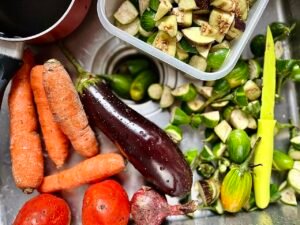
- Provence: Ratatouille, a colorful vegetable stew of eggplant, zucchini, peppers and tomatoes, flavored with herbs like thyme and rosemary.
- Marseille: Bouillabaisse, a fragrant fish soup.
- Alsace: Tarte flambée, a thin crispy flatbread with cream, onions and bacon, showing German influence.
- Brittany: Crêpes and savory buckwheat galettes, plus salted butter caramel.
- Lyon: Considered by many to be France’s food capital, famous for its traditional restaurants called bouchons.
- The Southwest: Cassoulet, a hearty dish of white beans and meat.
- The Alps: Fondue and raclette, where melted cheese is enjoyed with bread or potatoes.
- Nice: Socca, a chickpea pancake, and salade niçoise.
Children and Food in France
French schools take lunch seriously. School cafeterias, called cantines, often serve multi-course meals with a starter, main dish, cheese or yogurt, and dessert. Children are encouraged to try a variety of foods, including vegetables and different cheeses.
Many children also enjoy the goûter, an afternoon snack around 4 or 4:30 p.m. after school. A classic goûter might be a piece of baguette with a bar of chocolate inside, a pastry, fruit or a yogurt.
Table Manners in France
- Say “Bon appétit!” before eating.
- Keep your hands on the table, resting your wrists on the edge, rather than in your lap.
- Do not start eating until the host begins.
- Break bread with your hands rather than cutting it with a knife.
- Avoid snacking between meals as a general habit; meals happen at regular times.
French Chefs and Influence on the World
French cooking has shaped restaurants around the globe. Many cooking terms used in kitchens everywhere are French: chef, sauté, purée, menu, cuisine, restaurant and gourmet. The famous chef Auguste Escoffier organized professional kitchens and codified many recipes in the early 1900s. In the United States, Julia Child introduced French cooking to millions of home cooks through her cookbooks and television shows.
Fun Facts for Kids
- The word “restaurant” comes from a French word meaning “to restore.”
- Croissants are traditionally straight when made with butter in some bakeries and curved when made with other fats, though this varies.
- France celebrates a Fête du Pain (Bread Festival) each year in May.
Discussion Questions for Parents and Teachers
- Why do you think the baguette became a symbol of France?
- How is a long family meal different from eating quickly in front of a screen?
- What foods are special to your region or family?
- Why might eating food in season be good for people and the planet?
Conclusion
French food culture celebrates quality, tradition and togetherness. From the crackle of a fresh baguette to the cheerful bustle of a village market and the long, happy conversations around a family table, food in France is about savoring life. As the French would say, take your time, share with others, and above all, bon appétit!
Image: Nick Thweatt / Wikimedia Commons (CC BY-SA 3.0)
✍️ Have a story or article to share? Submit it for review and get published on Srikaram.org.