Image: <a href="https://commons.wikimedia.org/wiki/File:Fixed_versus_growth_mindset.png" rel="nofollow noopener" target="_blank">U3170151 / Wikimedia Commons</a> (CC BY-SA 4.0)
Simple words and habits that help children see mistakes as learning and keep trying when things get hard.
Some children give up quickly when something is hard; others keep at it. One idea that helps is a growth mindset — the belief that abilities can grow with effort, strategies and help.
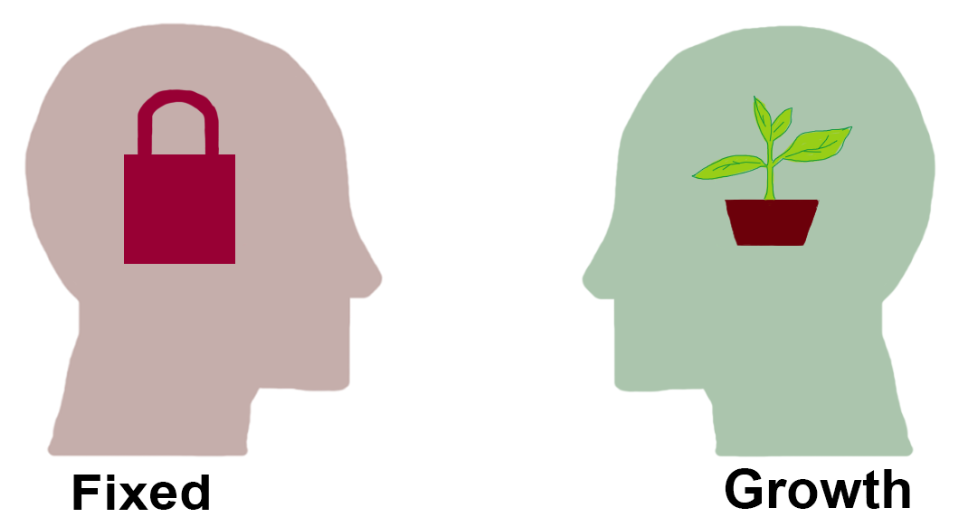
Fixed vs. growth thinking
- Fixed: “I’m just bad at math.”
- Growth: “I’m not good at this yet.”
That little word “yet” turns a dead end into a path.
Praise the process
Instead of “You’re so smart,” try “You worked hard on that,” or “I like how you tried a different way.” Process praise focuses on things a child can control.
Normalize mistakes
Share your own mistakes and what you learned. At dinner, ask, “What was something hard you tried today?” Celebrate the attempt, not just the result.
Teach strategies, not just effort
Effort alone isn’t enough if a child keeps trying the same thing. Help them break a problem down, look for examples, take a short break or ask for help.
Set stretch goals
Choose goals that are a little challenging but reachable — reading a slightly longer book, learning a new song on the piano — and track progress together.
The bottom line
Children who believe they can improve are more willing to take on challenges. Your words every day help shape that belief.
Vocabulary
| Word | Pronunciation | Meaning |
|---|---|---|
| mindset | MYND-set | a way of thinking |
| resilience | rih-ZIL-yens | ability to bounce back |
| strategy | STRAT-uh-jee | a plan for solving something |
| process | PRAH-ses | the steps taken |
| normalize | NOR-muh-lyz | to treat as ordinary |
| attempt | uh-TEMPT | a try |
| challenge | CHAL-enj | something hard to do |
| progress | PRAH-gres | forward movement |
Image: U3170151 / Wikimedia Commons (CC BY-SA 4.0)
✍️ Have a story or article to share? Submit it for review and get published on Srikaram.org.