
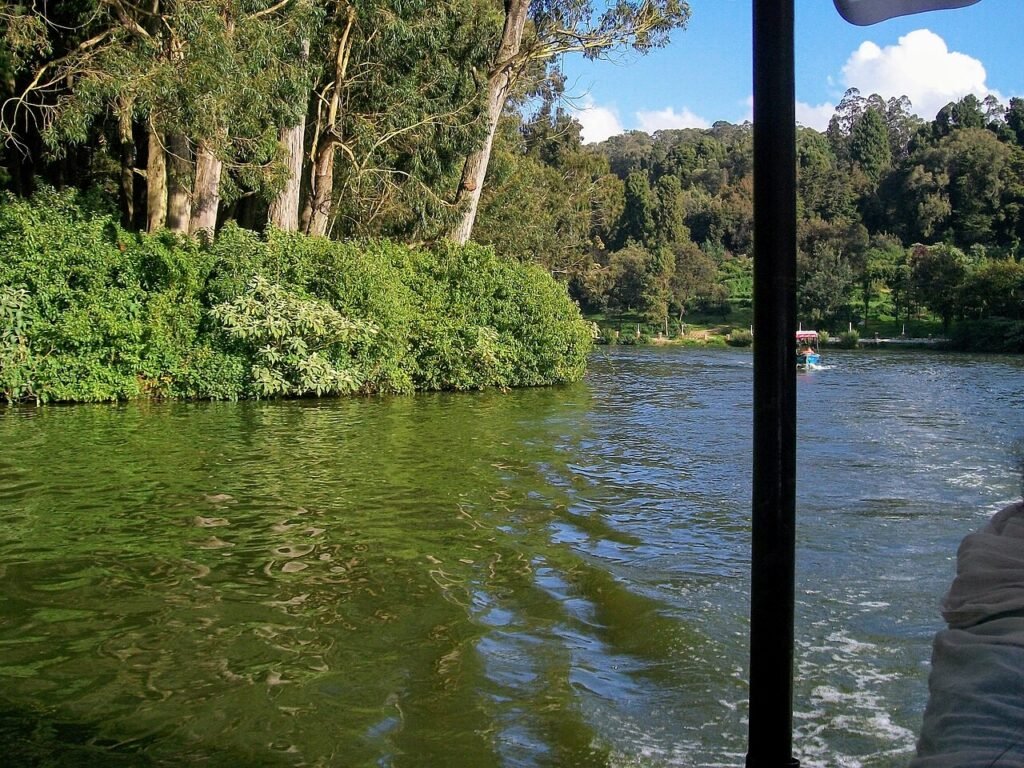
The Village That Argued About the River
The Village That Argued About the River — Two villages argued over a river for forty years. A short story about cooperation, sharing and solving conflicts, with a moral for kids.
There was once a river that ran between two villages, and for forty years the villages had argued about whose river it was.
The village on the eastern bank said it was theirs because their ancestors had arrived first. The village on the western bank said it was theirs because the river ran toward them in its last bend before the sea. Both villages had elders who remembered the argument from childhood, which made the argument feel true in the way that very old things feel true: as if it had always been this way and therefore always would be.
A girl from the eastern bank named Tara and a boy from the western bank named Kevin had been, without anyone’s knowledge or permission, meeting at the river itself to fish for the past two summers. They had established a protocol: they fished from opposite banks, they did not speak about the argument, and they shared whatever fish were too small to keep by throwing them back to the middle, where neither of them had to decide who received them.
One season, the river began to change.
It narrowed. The water ran slower. The fish became fewer and smaller. Both villages noticed and both villages blamed each other — the eastern village claiming the western was diverting water upstream; the western claiming the eastern was poisoning the banks.
At the river one afternoon, Tara and Kevin sat looking at the water in a silence that was different from their usual comfortable one.
‘It’s the dam,’ said Kevin finally. ‘My uncle went upstream last month. Someone built a dam. Not our village, not yours. A merchant from the city.’
Tara was quiet for a moment. ‘The elders will never believe that. They’ll each say the other village built it.’
‘Probably,’ said Kevin. ‘Unless someone shows them.’
The journey upstream took three days. They had told no adults — correctly calculating that adult involvement would immediately convert the expedition into a dispute about who had the right to investigate. Together, they found the dam: a new stone structure that had reduced the river’s flow by more than half, built to divert water to a merchant’s irrigation channels on land neither village had ever used.
They came back with drawings, measurements, and a sample of the stone — which Kevin recognised as quarried from a specific site he had visited with his father.
They presented this to both village councils at the same time — standing between the two groups of elders at the midpoint of the stone bridge that crossed the river — and delivered their findings in the same flat, factual tone they had agreed on: no blame, no drama, just evidence.
The elders were silent for a very long time.
Then the eldest elder of the eastern village said: ‘How long have you two been meeting?’
‘Two years,’ said Tara.
‘And in two years,’ said the eldest elder of the western village slowly, ‘you found what we did not find in forty.’
Neither child answered this. It did not seem like a question.
The two villages jointly removed the dam in the dry season. The river returned to its former width the following rainy season. In the agreement they signed about shared water rights, there was a clause — inserted at the suggestion of the youngest member of each council — that established a joint committee to address future disputes before they became forty-year arguments.
The committee met monthly for the next thirty years. Its first two members were Tara and Kevin.
🌟 Moral: The people best positioned to solve a problem are often those who are not invested in the argument about who caused it. Fresh eyes, shared interest, and the willingness to look at actual evidence rather than inherited grievance is sometimes all that separates a forty-year argument from a three-day solution.
Related Reading
- The Magical Adventures of Anaya and the Enchanted Forest
- Chintu and the Lost Kite: A Sankranti Story for Kids About Letting Go
- The Cobbler’s Wish: A Short Story About Contentment for Kids
More: English Short Stories · Stories in 14 languages · Srikaram home
✍️ Have a story or article to share? Submit it for review and get published on Srikaram.org.