
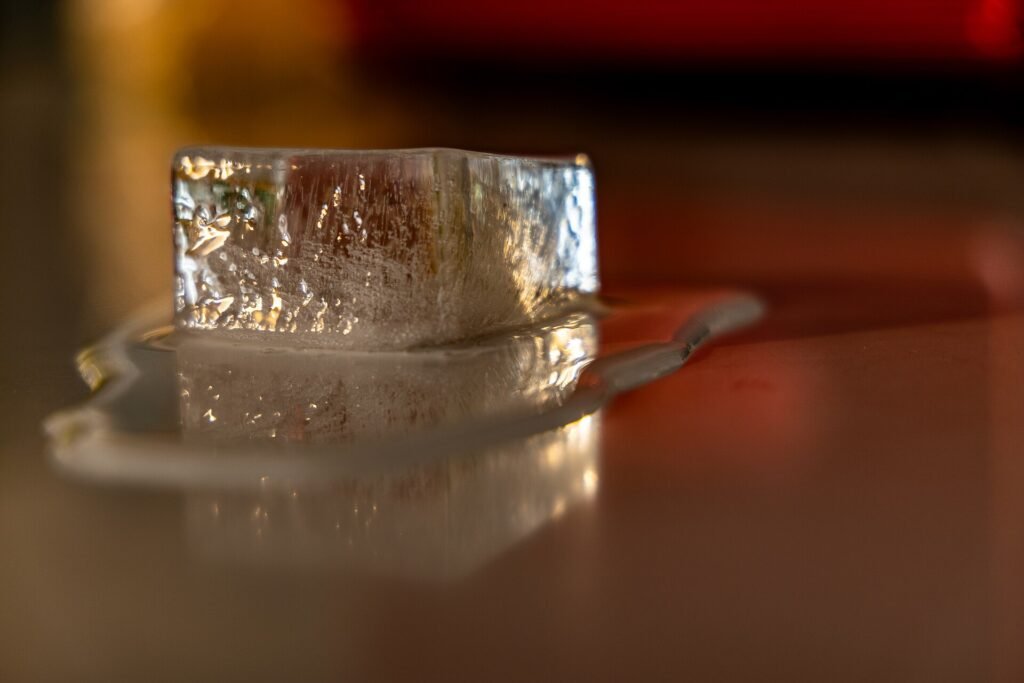
States of Matter for Kids: Solids, Liquids, and Gases Explained
States of Matter for Kids — States of matter for kids explained simply: solids, liquids and gases, how matter changes state, everyday examples and easy experiments to try.
Everything around you is made of matter: your chair, the water you drink, and the air you breathe. Matter is anything that has mass and takes up space. But matter comes in different forms, called states of matter.
The three main states are solids, liquids, and gases.
What Is Matter Made Of?
All matter is made of tiny particles called atoms and molecules, too small to see. How these particles are arranged and how they move decides whether something is a solid, liquid, or gas.
Solids
- Solids have a fixed shape and a fixed size (volume).
- Their particles are packed tightly together and only vibrate in place.
Examples: Ice, stone, wood, a spoon, a book, a coconut shell.
Liquids
- Liquids have a fixed volume but no fixed shape. They take the shape of their container.
- Their particles are close together but can slide past each other, so liquids flow.
Examples: Water, milk, oil, juice, honey.
Gases
- Gases have no fixed shape and no fixed volume. They spread out to fill any space.
- Their particles are far apart and move very fast.
Examples: Air, steam, the oxygen we breathe, the carbon dioxide in fizzy drinks.
Changing States
Matter can change from one state to another when it is heated or cooled.
- Melting: Solid → liquid (ice melts into water)
- Freezing: Liquid → solid (water freezes into ice)
- Evaporation / boiling: Liquid → gas (water becomes steam)
- Condensation: Gas → liquid (steam turns into water droplets)
- Sublimation: Solid → gas directly (dry ice turns into gas)
Everyday Examples
- Ghee is solid in cold weather and melts into liquid when warmed.
- Steam rises from a pot of boiling rice.
- Droplets form on the outside of a cold glass of water (condensation).
- Wet clothes dry in the sun (evaporation).
- Ice cream melts on a hot day.
Is There a Fourth State?
Yes! Scientists also study plasma, a super-hot state of matter found in the Sun, lightning, and neon signs. There are other unusual states too, but solids, liquids, and gases are the ones we see most in daily life.
Easy Experiments
1. Ice Melting Race Place ice cubes in different spots: sunlight, shade, a metal plate, and a wooden plate. Which melts first?
2. Balloon and Bottle Stretch a balloon over an empty bottle. Place the bottle in a bowl of warm water. The balloon inflates as the air inside expands!
3. Make a Cloud in a Jar With adult help, pour warm water into a jar and cover it with a plate of ice. Watch droplets and “cloud” form inside as vapour cools and condenses.
4. Solid, Liquid, or Gas Hunt Walk around your home and list items in each state.
Quick Quiz
- Is honey a solid or a liquid? (Liquid: it flows, just slowly!)
- What happens to water at 100°C at sea level? (It boils and becomes steam.)
- What state is the air inside a balloon? (Gas.)
Final Thoughts
States of matter are all around us, in the kitchen, the sky, and the weather. Once children understand solids, liquids, and gases, they start to see science everywhere, from melting ghee to morning mist.
You May Also Enjoy
- The Truth About AI in Early Childhood Education: Helpful or Harmful?
- The Friendship Science: What Research Says About Children’s Social Development
- Raising Children Who Think Critically in the Age of Misinformation
Featured image: Kathy Jantz / CC BY 4.0 via Wikimedia Commons
More: Science for Kids · Stories in 14 languages · Srikaram home
✍️ Have a story or article to share? Submit it for review and get published on Srikaram.org.