
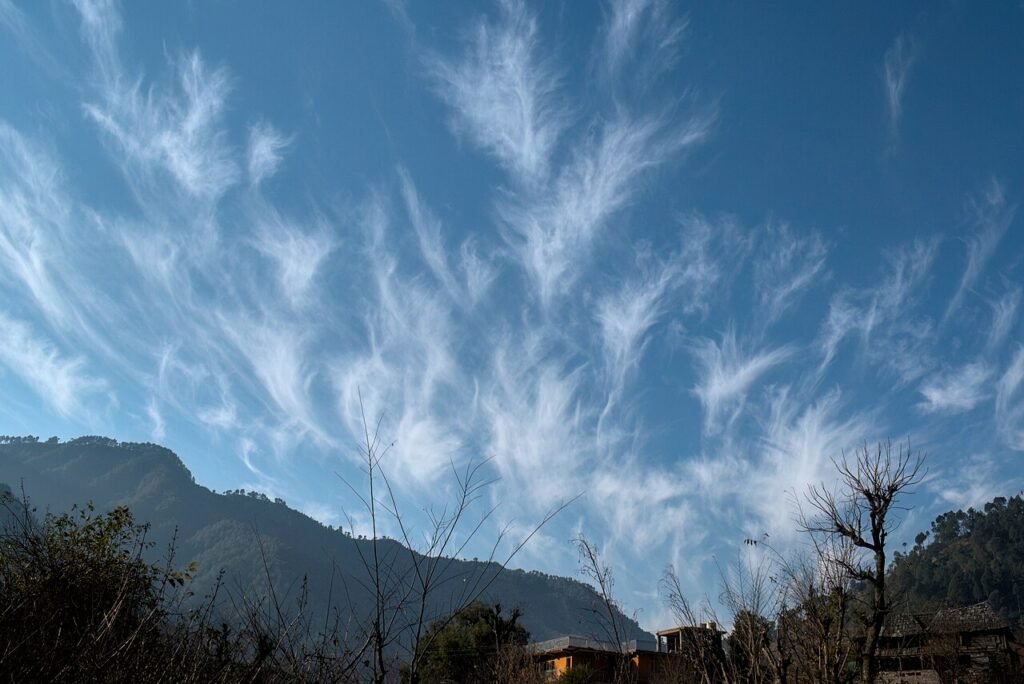
Why Is the Sky Blue? 10 Curious Science Questions Kids Ask, Answered
Children are natural scientists. They ask “Why?” about everything, sometimes a hundred times a day! Here are simple, accurate answers to ten of the most common science questions kids ask.
1. Why Is the Sky Blue?
Sunlight looks white, but it’s actually made of all the colours of the rainbow. When sunlight enters Earth’s air, it bumps into tiny gas particles. These particles scatter blue light much more than red or yellow light, because blue light travels in shorter, choppier waves. This scattered blue light spreads all across the sky, so the sky looks blue. Scientists call this Rayleigh scattering.
2. Why Are Sunsets Orange and Red?
At sunset, sunlight travels through much more air to reach your eyes. Most of the blue light gets scattered away along the way, leaving the reds, oranges, and pinks to paint the sky.
3. How Are Rainbows Made?
When sunlight shines through raindrops, each drop acts like a tiny prism. It bends the light and splits it into its colours: red, orange, yellow, green, blue, indigo, and violet. To see a rainbow, stand with the Sun behind you and rain in front of you.
4. What Causes Thunder and Lightning?
Inside storm clouds, ice and water bump together and build up electric charge. Lightning is a giant spark of electricity. It heats the air so quickly that the air expands with a boom: that’s thunder. Because light travels faster than sound, we see lightning before we hear thunder.
Tip: Count the seconds between the flash and the thunder. Divide by three to estimate the distance in kilometres.
5. Why Is the Sea Salty?
Rain slowly wears away rocks on land, releasing tiny amounts of minerals, including salt. Rivers carry these minerals into the ocean. When ocean water evaporates, the salt stays behind. Over millions of years, the sea became salty.
6. Why Does the Moon Change Shape?
The Moon doesn’t make its own light; it reflects sunlight. As the Moon travels around Earth, we see different amounts of its sunlit side. That’s why it seems to grow from a thin crescent to a full moon (Pournami) and back to a new moon (Amavasya).
7. Why Do We Have Day and Night?
Earth spins like a top, completing one turn about every 24 hours. When your side of Earth faces the Sun, it’s day. When it turns away, it’s night.
8. Why Do Leaves Fall From Some Trees?
Some trees drop their leaves in cold or dry seasons to save water and energy. Without leaves, they lose less water and can rest until conditions improve.
9. Why Do We Have Seasons?
Earth is tilted. As it travels around the Sun over a year, different parts of Earth lean toward the Sun and get more direct sunlight, which makes them warmer. In India, the monsoon season is also shaped by winds and the heating of land and sea.
10. Why Do Cats’ Eyes Glow in the Dark?
Many animals, including cats, have a special reflective layer at the back of their eyes called the tapetum lucidum. It bounces light back through the eye, helping them see in dim light and making their eyes seem to glow.
How to Encourage Curious Kids
- Welcome questions, even the tricky ones.
- Say “Let’s find out together” when you don’t know the answer.
- Do simple experiments, like making a rainbow with a glass of water and sunlight.
- Visit science centres, planetariums, and libraries.
- Ask them back: “What do you think?” Their guesses build scientific thinking.
Final Thoughts
Every “why” is the beginning of a scientist’s journey. Keep asking questions, keep exploring, and never stop wondering about the world!
You May Also Enjoy
- A Parent’s Master Checklist for Summer Vacation Enrichment
- Building Emotional Intelligence (EQ) in a World of Emojis
- The Decline of Handwriting: Does Cursive Still Matter in a Digital World?
More: Science for Kids · Stories in 14 languages · Srikaram home
✍️ Have a story or article to share? Submit it for review and get published on Srikaram.org.