
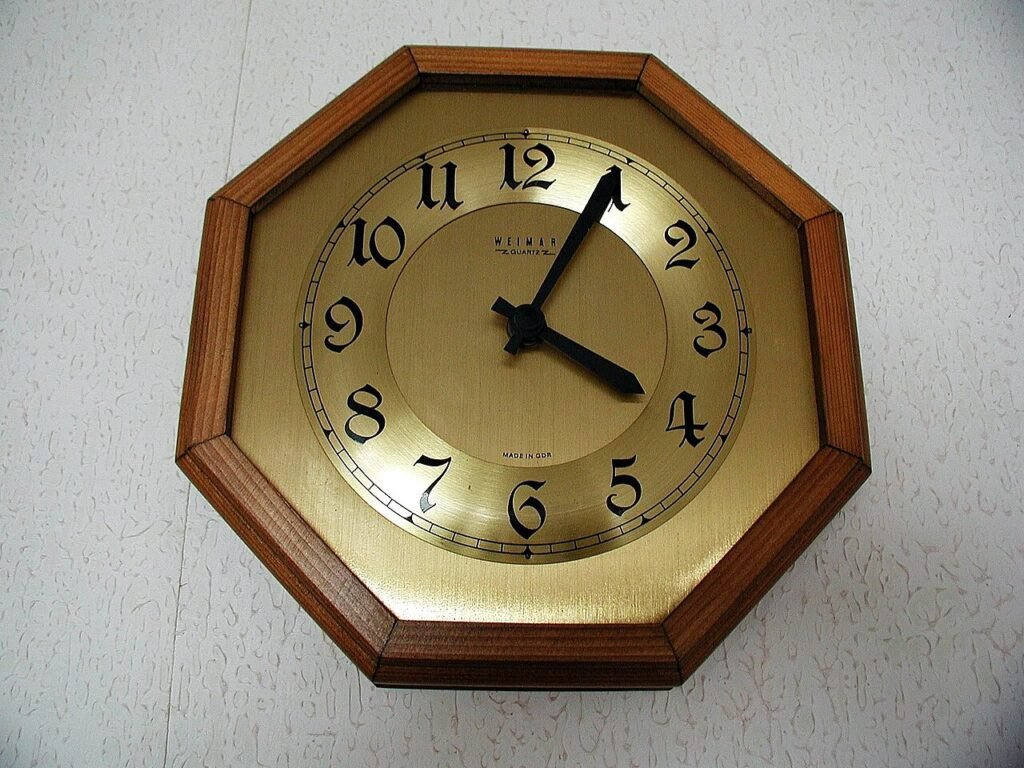
How to Teach Kids to Tell Time: A Step-by-Step Guide With Games
How to Teach Kids to Tell Time — A step-by-step guide to teach kids to tell time on an analogue clock, with hands-on games, practice ideas and tips for each age and stage.
In a world of digital screens, reading an analogue clock is still an important skill. It helps children understand time, fractions, and daily routines. Most children are ready to start learning to tell time around ages five to seven.
Here’s a simple, step-by-step way to teach kids to tell time.
Step 1: Build a Sense of Time
Before looking at clocks, help children understand time in daily life:
- Sequence words: morning, afternoon, evening, night; before, after, first, next.
- Routine talk: “We eat breakfast in the morning. We go to bed at night.”
- Time lengths: “Brushing takes two minutes. Our drive to Ammamma’s house takes one hour.”
Step 2: Get to Know the Clock
Show a real or toy analogue clock and explain:
- The clock has numbers 1 to 12.
- The short hand is the hour hand.
- The long hand is the minute hand.
- The hands move clockwise, in the same direction as the numbers.
Tip: Say “the short hand is short like the word hour” or colour the hands differently.
Step 3: Learn “O’Clock”
Start with only the hour hand. When the long hand points straight up at 12, it’s “o’clock.”
- Hour hand on 3, minute hand on 12 = 3 o’clock.
Practise with routines: “We eat lunch at 1 o’clock.”
Step 4: Learn “Half Past”
When the minute hand points to 6, it has travelled halfway around the clock.
- Hour hand between 4 and 5, minute hand on 6 = half past 4 (4:30).
Point out that the hour hand moves too; at half past, it’s halfway between two numbers.
Step 5: Learn “Quarter Past” and “Quarter To”
Divide the clock into four quarters, like cutting a roti into four pieces.
- Minute hand on 3 = quarter past (15 minutes).
- Minute hand on 9 = quarter to the next hour (45 minutes).
Step 6: Count by Fives
Each number on the clock represents 5 minutes for the minute hand. Practise counting by fives around the clock: 5, 10, 15, 20… up to 60.
- Minute hand on 4 = 20 minutes past.
- Minute hand on 8 = 40 minutes past (or 20 minutes to).
Step 7: Individual Minutes
Finally, show the small marks between numbers. Each mark is one minute. Children can count on from the nearest five.
Step 8: Connect to Digital Time
Show how analogue times match digital displays: 3:30, 7:15, 9:45. Children often find it helpful to see both.
Make a DIY Paper Clock
You need a paper plate, card, a split pin (brad), and markers.
- Write numbers 1 to 12 around the plate.
- Cut a short hand and a long hand from card.
- Attach them in the centre with the split pin.
- Practise showing different times.
Fun Telling Time Games
- What’s the time, Mr. Wolf? A classic playground game that uses o’clock times.
- Routine clock: Set the paper clock for each daily activity: wake up, school, lunch, play, dinner, bed.
- Clock bingo: Bingo cards with clock faces; call out the times.
- Time detective: Ask your child to check the time at random moments during the day.
- Timer challenges: “Can you tidy your toys in 5 minutes?”
Tips for Parents
- Learn one step at a time; don’t rush to minutes.
- Use a real analogue clock at home where children can see it.
- Practise little and often during everyday life.
- Be patient; telling time involves several skills at once.
Final Thoughts
Telling time is a skill that builds independence and confidence. With hands-on practice, games, and daily routines, your child will soon be reading the clock and announcing, “It’s time to play!”
You May Also Enjoy
- The Truth About AI in Early Childhood Education: Helpful or Harmful?
- The Friendship Science: What Research Says About Children’s Social Development
- Raising Children Who Think Critically in the Age of Misinformation
More: Child Psychology · Stories in 14 languages · Srikaram home
✍️ Have a story or article to share? Submit it for review and get published on Srikaram.org.