
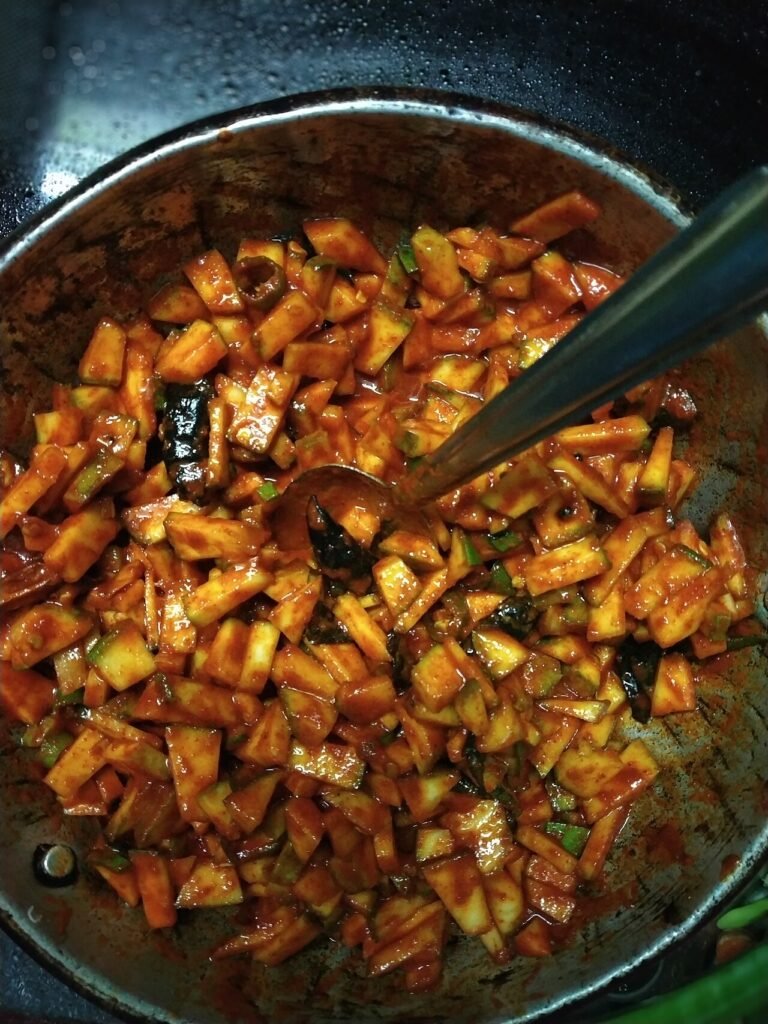
Avakaya: The Story of Andhra’s Famous Mango Pickle and Its Summer Tradition
Ask anyone from Andhra Pradesh about the taste of home, and there is a good chance they will say one word: Avakaya. This fiery, tangy mango pickle is more than a condiment. It is a summer ritual, a family tradition, and one of the proudest symbols of Telugu cuisine.
What Is Avakaya?
Avakaya is a pickle made from raw, sour mangoes cut into pieces with the hard inner shell of the seed still attached. The pieces are mixed with:
- Mustard powder (aavalu), which gives Avakaya its sharp, pungent kick and its name
- Red chilli powder, for heat and bright red colour
- Salt, which preserves the pickle
- Sesame or groundnut oil, poured generously to cover and protect the pickle
- Often fenugreek (menthulu) seeds or powder, and in some families garlic
The pickle rests for a few days so the mango absorbs the spices, and it can last for months.
The Summer Ritual
Avakaya season arrives in the hot months of April and May, when raw mangoes are at their best. In many Telugu homes, making Avakaya is a family event:
- Choosing the mangoes: Firm, sour varieties are selected carefully at the market.
- Washing and drying: The mangoes are washed and wiped completely dry, because even a drop of water can spoil the pickle.
- Cutting: Cutting through the tough seed shell takes skill and a special heavy knife or cutter, often handled by an experienced elder.
- Mixing: Spices, salt, and oil are mixed with the mango pieces, often by hand in a large vessel.
- Storing: The pickle is packed into ceramic jars (jaadi) or glass bottles, covered with oil, and left to mature.
Neighbours and relatives often help each other, sharing tips and gossip, and every family insists that their recipe is the best.
Popular Varieties
- Classic Avakaya: Mustard-based, spicy, and bold.
- Bellam Avakaya: Made with jaggery for a sweet-spicy flavour.
- Menthi Avakaya: Fenugreek-forward, with a slightly bitter, earthy taste.
- Pesara Avakaya: Made with green gram (moong) powder.
- Allam Avakaya: With ginger added.
How Avakaya Is Eaten
The classic way is simple and unforgettable: hot rice, a spoonful of Avakaya, and a generous drizzle of ghee or the pickle’s own oil, mixed together by hand. It is also served with curd rice, pappu (dal), dosa, and upma.
Avakaya and Telugu Identity
Avakaya often travels in suitcases wrapped in several layers of plastic, carried by grandparents to children and grandchildren living abroad. For many Telugu families outside India, a jar of homemade Avakaya is a taste of home.
A Note for Families With Kids
Avakaya is very spicy and salty, so young children should only try a tiny amount mixed with plenty of rice and ghee or curd. Instead of eating it, kids can enjoy helping: washing mangoes, measuring spices (with supervision), and learning the family recipe.
Final Thoughts
Avakaya is a story of summer heat, family teamwork, and flavours passed down through generations. If you have a family recipe, write it down with your children. One day, they may make it for their own families.
You May Also Enjoy
- Is Ram Setu Real? Exploring the Myth, History, and Science Behind the Sacred Bridge
- Aryan vs Dravidian Theory: Understanding the Historical and Cultural Debate
- Key Differences Between Telugu and Hindi Languages
More: World History & Culture · Stories in 14 languages · Srikaram home
✍️ Have a story or article to share? Submit it for review and get published on Srikaram.org.