20 Educational Activities for Toddlers at Home (Ages 1–3)
Toddlers learn best through play. Every time they stack, pour, sort, sing, or explore, their brains are growing. You don’t need expensive toys; everyday household items can become powerful learning tools.
Here are twenty educational activities for toddlers aged one to three. Always supervise closely, and avoid small objects that could be a choking hazard.
Sensory Play
1. Rice or Dal Bin Fill a tub with dry rice or dal and add spoons, cups, and funnels for scooping and pouring.
2. Water Play Give your toddler cups, sponges, and bowls in a shallow tub of water.
3. Texture Board Stick different materials, such as cotton, sandpaper, cloth, and foil, onto cardboard for touching and naming.
4. Play Dough Make simple dough from flour, salt, water, and oil. Squishing, rolling, and poking build hand strength.
Language Activities
5. Name Everything Describe what you see and do: “Look, a red flower! We’re washing the plate.”
6. Picture Books Read short, colourful books daily and point to pictures.
7. Songs and Rhymes Sing nursery rhymes and Telugu songs like Chandamama Raave with actions.
8. Photo Album Show family photos and name each person: Amma, Nanna, Ammamma, Thatha.
9. Telephone Talk Pretend to call someone on a toy phone and encourage your toddler to “talk.”
Fine Motor Skills
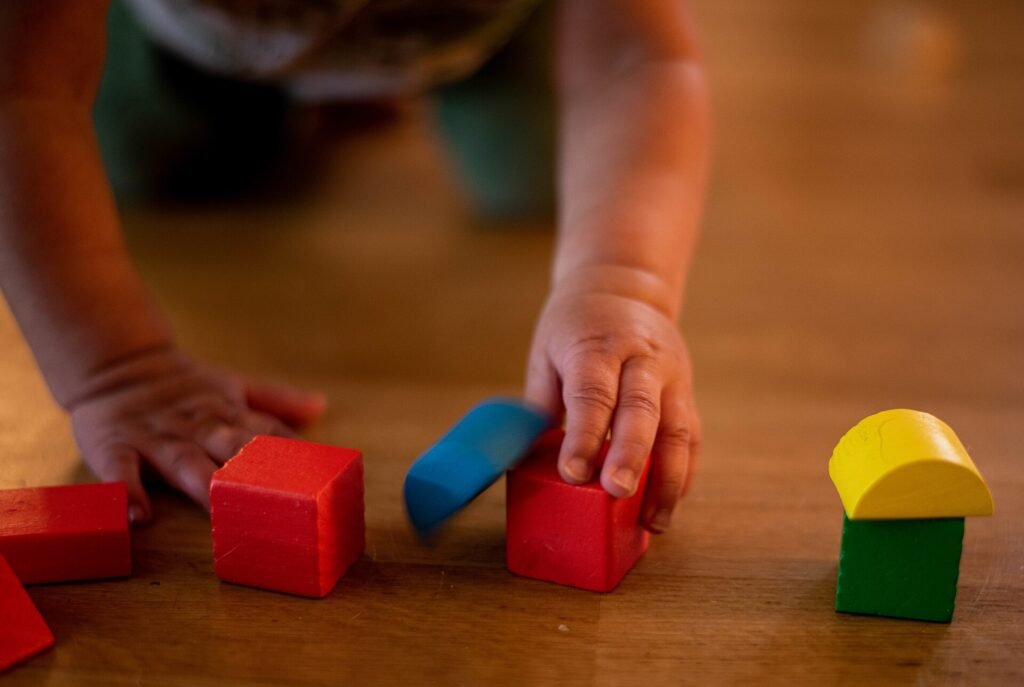
10. Stacking Cups or Blocks Stacking builds hand-eye coordination and early understanding of size.
11. Posting Game Cut a slot in a box lid and let your toddler post large bottle lids or cards.
12. Stickers Peeling and sticking stickers strengthens finger muscles.
13. Chunky Crayons Let toddlers scribble freely; it’s the first step toward writing.
14. Threading Thread large beads or pasta tubes onto a thick string (for older toddlers).
Early Maths and Thinking
15. Sorting by Colour Sort toys, blocks, or socks by colour.
16. Counting Everything Count stairs, bananas, and spoons together.
17. Shape Puzzles Simple wooden puzzles teach shapes and problem-solving.
18. Big and Small Compare objects: a big spoon and a small spoon, a big ball and a small ball.
Movement and Gross Motor
19. Obstacle Course Use cushions, boxes, and chairs to crawl over, under, and through.
20. Dance Party Play music and dance, clap, stomp, and freeze.
Tips for Toddler Learning
- Follow their lead: Toddlers learn best when they’re interested.
- Keep it short: A few minutes per activity is normal.
- Repeat often: Toddlers love repetition; it helps them learn.
- Talk constantly: Narrate what you’re doing to build vocabulary.
- Limit screens: Paediatric guidelines recommend avoiding screen time for most toddlers under 18 to 24 months, except video calls.
- Be patient with mess: Mess is often a sign of learning!
Bilingual Toddlers
Toddlers are excellent language learners. Use Telugu during play, songs, and routines. Speaking two languages from an early age is natural and beneficial.
Final Thoughts
For toddlers, play is learning. A tub of rice, a stack of cups, or a simple song can teach colours, counting, words, and coordination. The most important ingredient is you: your time, attention, and joy in exploring together.
You May Also Enjoy
- The Truth About AI in Early Childhood Education: Helpful or Harmful?
- The Friendship Science: What Research Says About Children’s Social Development
- Raising Children Who Think Critically in the Age of Misinformation
Featured image: U.S. Air Force photo by Senior Airman Andrew Alvarado / Public domain via Wikimedia Commons
More: Child Psychology · Stories in 14 languages · Srikaram home
✍️ Have a story or article to share? Submit it for review and get published on Srikaram.org.