
Telugu Wedding Traditions Explained: From Pellichoopulu to Talambralu
A Telugu wedding (pelli) is a colourful celebration full of meaningful rituals, music, and playful moments. Customs vary between regions and communities, but many traditions are shared across Andhra Pradesh and Telangana. Here is a simple guide that families can use to explain Telugu wedding traditions to children.
Before the Wedding
Pellichoopulu
Traditionally, the families of the bride and groom meet in a formal visit called pellichoopulu, meaning “seeing for marriage.” Today, it is often a friendly family meeting.
Nischitartham (Engagement)
The families formally agree to the marriage. The date and time (muhurtham) are fixed, often by consulting a priest, and gifts are exchanged.
Pasupu Kottadam and Mangala Snanam
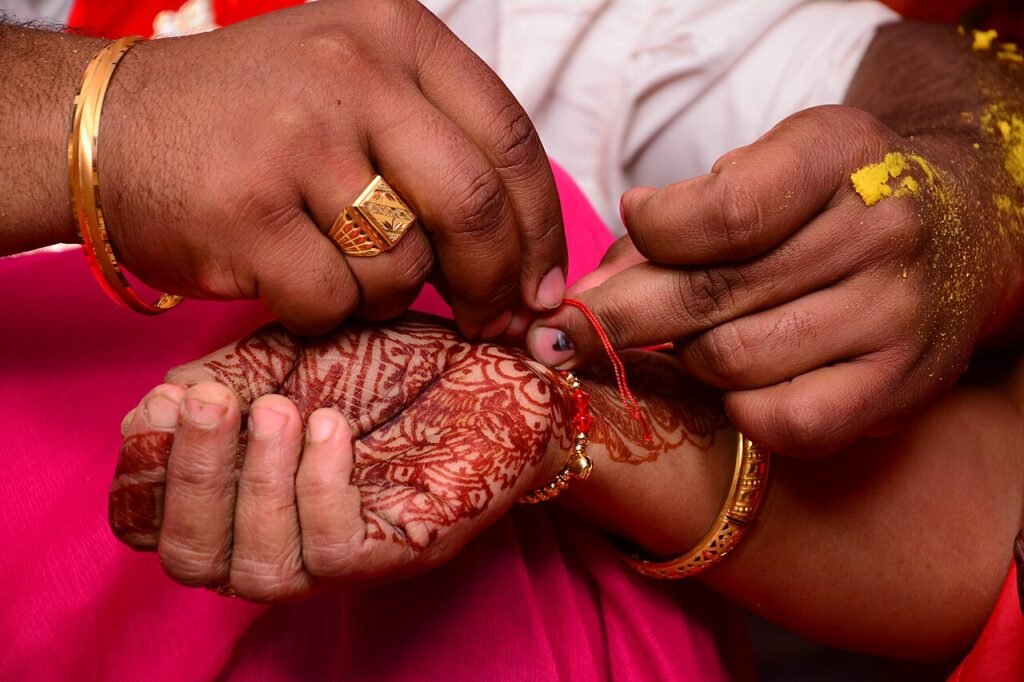
In the days before the wedding, turmeric is ground in a joyful ceremony, and both the bride and groom receive a mangala snanam, a holy bath with turmeric and oil, to purify and bless them.
Wedding Day Rituals
Snathakam and Kasi Yatra
In the snathakam ritual, the groom symbolically completes his life as a student. Then comes the fun Kasi Yatra: the groom pretends to leave for Kashi to live as an ascetic, carrying an umbrella and a walking stick. The bride’s brother stops him and persuades him to marry his sister instead. Children love this playful moment.
Gauri Puja
The bride prays to Goddess Gauri (Parvati) for a happy married life while waiting for the ceremony.
Kanyadanam
The bride’s parents formally give their daughter’s hand in marriage, often one of the most emotional moments of the day. In many families, the bride is carried to the mandapam in a decorated bamboo basket by her maternal uncles.
Jeelakarra Bellam
At the auspicious muhurtham, the bride and groom place a paste of cumin seeds (jeelakarra) and jaggery (bellam) on each other’s heads. A cloth screen between them is then removed, and they see each other. Cumin and jaggery together symbolise a relationship that stays together through both bitter and sweet times. This moment is considered the heart of the Telugu wedding.
Mangalya Dharana
The groom ties the mangalasutram, a sacred thread with two gold discs, around the bride’s neck with three knots, as blessings are showered on the couple.
Talambralu
One of the most joyful rituals: the bride and groom shower each other with talambralu, rice mixed with turmeric and sometimes pearls. It often turns into a playful competition, with relatives cheering for each side.
Saptapadi
The couple takes seven steps together around the sacred fire, each step representing a promise, such as nourishment, strength, prosperity, and friendship.
Arundhati Nakshatram
The groom shows the bride the star Arundhati, a symbol of a devoted and faithful wife, in the night sky.
After the Wedding
Appagintalu
In this emotional farewell, the bride’s parents entrust their daughter to the groom’s family. Many tears are shed, and it shows the deep bond between the bride and her family.
Explaining Weddings to Children
- Point out the symbols: cumin and jaggery, turmeric rice, the seven steps.
- Let them join fun traditions like cheering during talambralu.
- Talk about the values behind the rituals: respect, family, and promises.
Final Thoughts
Telugu wedding traditions blend sacred meaning with warmth and fun. Understanding the story behind each ritual helps children appreciate their culture and enjoy every moment of a family celebration.
You May Also Enjoy
- 5 Hidden Life Lessons in the Bhagavad Gita for Today’s Teenagers
- The Physics of the Pushpaka Vimana: Ancient Myth or Early Science?
- The Kakatiya Dynasty: Leadership Lessons from Ancient Warangal
More: World History & Culture · Stories in 14 languages · Srikaram home
✍️ Have a story or article to share? Submit it for review and get published on Srikaram.org.