
Deepavali in Telugu Homes: Naraka Chaturdashi, Satyabhama’s Story, and Family Traditions
Deepavali, the festival of lights, is celebrated across India, but Telugu homes have their own special stories and customs. Falling in Ashvayujam or Kaarteekam (usually October or November), Deepavali in Andhra Pradesh and Telangana is centred on Naraka Chaturdashi and the bright rows of diyas on Amavasya night.
The Story of Naraka Chaturdashi
In the Telugu tradition, the hero of Deepavali is not only Lord Krishna, but also his wife, Satyabhama.
The demon king Narakasura had grown cruel and powerful. He imprisoned thousands of people and stole the earrings of Aditi, the mother of the gods. Krishna set out to defeat him, and Satyabhama rode with him into battle. According to the popular Telugu telling, when Krishna was wounded, Satyabhama took up the bow herself and defeated Narakasura.
Before he died, Narakasura asked that his death be celebrated with lights, so that people would remember the victory of good over evil. That is why the day before Deepavali Amavasya is called Naraka Chaturdashi.
Satyabhama’s courage makes this a wonderful story to share with both girls and boys.
Traditions on Naraka Chaturdashi
- Early oil bath (Abhyanga Snanam): Before sunrise, elders apply warm sesame oil to children’s heads, followed by a bath. It is believed to bring health and good luck.
- New clothes: Children wear new clothes and seek blessings from elders.
- Small crackers at dawn: In many homes, a few crackers are burst early in the morning to mark Narakasura’s defeat.
Deepavali Amavasya: The Night of Lamps
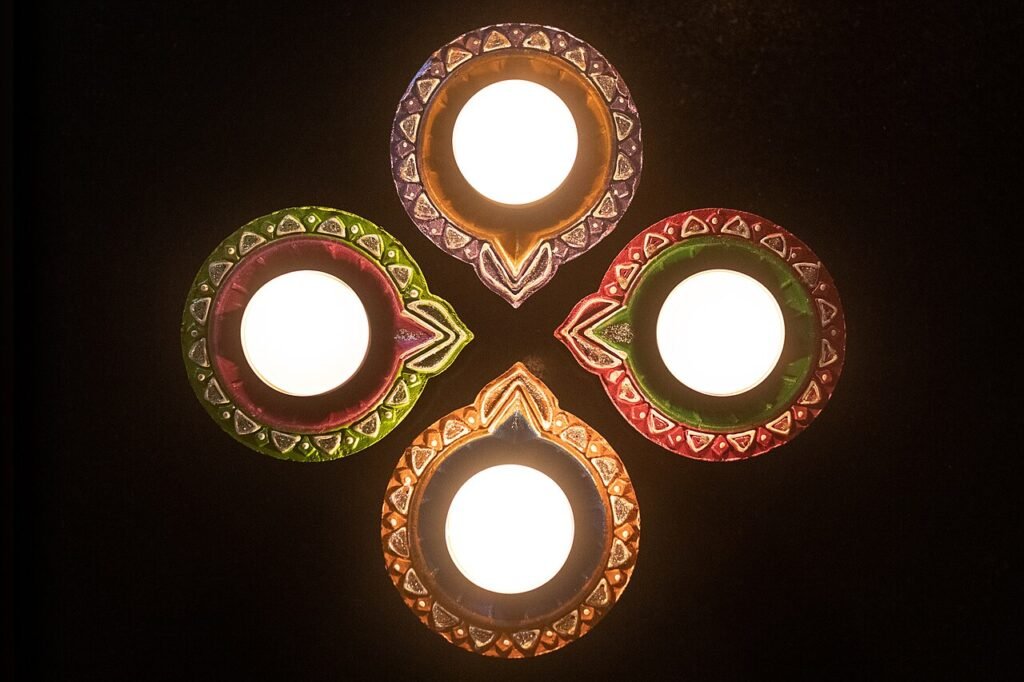
On the new moon night, homes glow with rows of clay deepalu (diyas) along doorsteps, windows, walls, and balconies. The darkness of the new moon makes the lights even more magical.
Many families perform Lakshmi Puja in the evening, praying to Goddess Lakshmi for prosperity. Some households also observe Kedareswara Vratham (Kedara Gauri Nomu) around this time.
Sweets and Snacks
Festive kitchens are busy for days before Deepavali. Popular treats include:
- Kajjikayalu: Crescent-shaped fried pastries filled with coconut and jaggery or sugar.
- Ariselu: Rice-flour and jaggery discs topped with sesame seeds.
- Sunnundalu: Urad dal, jaggery, and ghee laddus.
- Janthikalu / Murukulu: Crunchy savoury spirals.
- Payasam and laddus of many kinds.
A Safe and Eco-Friendly Deepavali
- Light traditional clay diyas instead of relying only on electric lights.
- Choose fewer, quieter crackers, or celebrate with lamps and sparklers only, to protect children, elders, and pets.
- Always keep a bucket of water nearby and supervise children closely.
- Make rangoli with natural colours or flower petals.
Celebrating Deepavali With Kids
- Tell the story of Satyabhama and Narakasura.
- Paint clay diyas together a few days before the festival.
- Help make simple sweets like laddus or kajjikayalu.
- Make a rangoli at the doorstep and place diyas around it.
- Talk about what “light over darkness” means: kindness over cruelty, knowledge over ignorance.
Final Thoughts
Deepavali in Telugu homes celebrates courage, family, and the triumph of light. Whether you celebrate in Hyderabad, Vijayawada, or far away from India, a single glowing diya and a well-told story can carry the spirit of the festival to the next generation.
You May Also Enjoy
- The Evolution of Ugadi: How Our Ancestors Calculated the Cosmos
- 5 Hidden Life Lessons in the Bhagavad Gita for Today’s Teenagers
- The Physics of the Pushpaka Vimana: Ancient Myth or Early Science?
More: World History & Culture · Stories in 14 languages · Srikaram home
✍️ Have a story or article to share? Submit it for review and get published on Srikaram.org.