
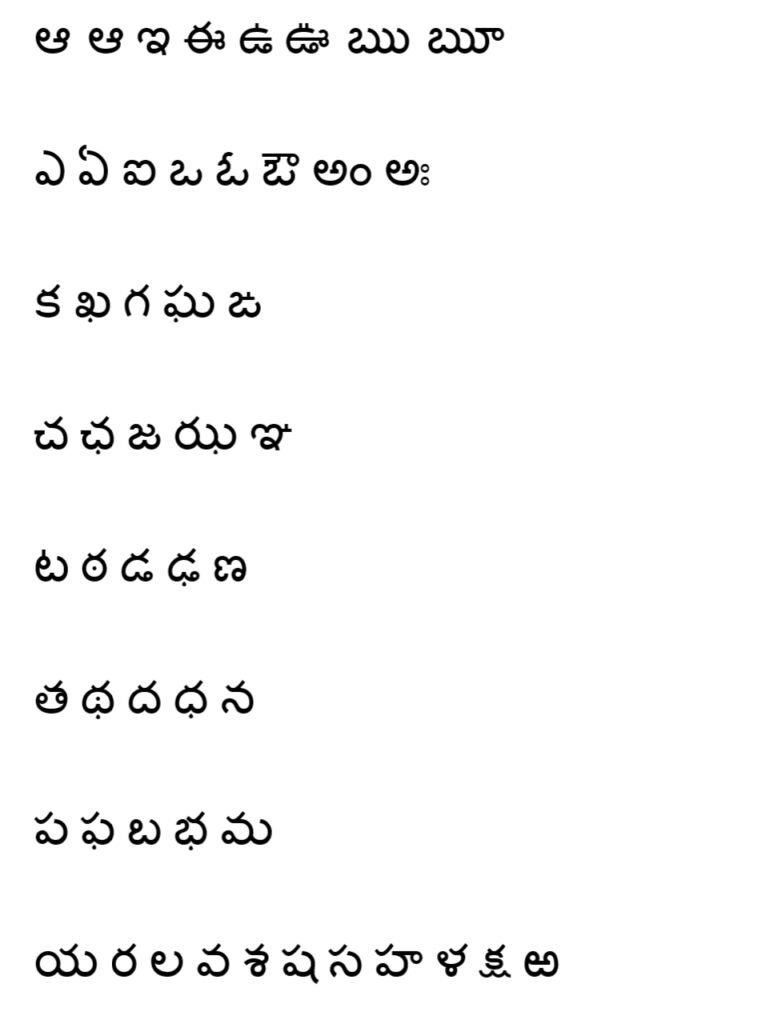
Telugu vowels or “అచ్చులు”
Telugu vowels or "అచ్చులు" — Telugu vowels (అచ్చులు, Achulu): all vowels with pronunciation, short and long sounds, and examples for kids and beginners.
Telugu vowels, known as “అచ్చులు” (Achulu), are fundamental to the language’s pronunciation and writing system. Each vowel has a unique sound and can also modify consonants when combined. Here’s a detailed explanation of Telugu vowel sounds:
1. అ (a)
- Sound: /ʌ/ as in “cup”
- Usage: This is the basic vowel sound. It’s used as the default vowel sound in many syllables and words.
- Example: అమ్మ (amma) – Mother
2. ఆ (aa)
- Sound: /ɑː/ as in “father”
- Usage: This is a long vowel sound, pronounced with an extended vocalization.
- Example: ఆపిల్ (apple) – Apple
3. ఇ (i)
- Sound: /ɪ/ as in “bit”
- Usage: This vowel is short and is used in words where the vowel sound is not extended.
- Example: ఇల్లు (illu) – House
4. ఈ (ii)
- Sound: /iː/ as in “see”
- Usage: This is a long vowel sound, pronounced with extended vocalization.
- Example: ఈక (eeka) – Leaf
5. ఉ (u)
- Sound: /ʊ/ as in “put”
- Usage: This vowel is short and used in words where the vowel sound is not extended.
- Example: ఉపాధ్యాయుడు (upaadhyaayudu) – Teacher
6. ఊ (uu)
- Sound: /uː/ as in “boot”
- Usage: This is a long vowel sound, pronounced with an extended vocalization.
- Example: ఉప్పు (uppu) – Salt
7. ఋ (ru)
- Sound: /ru/ as in “rupee” (a bit harder to pinpoint in English but close to “ri” in “river” with a rolled r sound)
- Usage: This vowel sound is less common and has a unique pronunciation.
- Example: ఋషి (rushi) – Sage
8. ఎ (e)
- Sound: /e/ as in “bed”
- Usage: This vowel sound is used in many words and is pronounced similarly to the ‘e’ in “bet.”
- Example: ఎత్తు (ettu) – Height
9. ఐ (ai)
- Sound: /aɪ/ as in “fly”
- Usage: This is a diphthong vowel sound, combining ‘a’ and ‘i’ sounds.
- Example: పై (pai) – On
10. ఒ (o)
- Sound: /o/ as in “pot” (pronounced with a rounded lip)
- Usage: This vowel sound is used in many Telugu words and has a rounded pronunciation.
- Example: కొబ్బరి (kobbari) – Coconut
11. ఔ (au)
- Sound: /aʊ/ as in “how”
- Usage: This is a diphthong vowel sound, combining ‘a’ and ‘u’ sounds.
- Example: తౌక (tauka) – Approximate
12. అం (am)
- Sound: /aŋ/ as in the nasalized ‘um’ in English
- Usage: This is an anusvara, used to denote nasalization.
- Example: గంగ (ganga) – Ganges
13. అః (ah)
- Sound: /aɦ/ (a soft ‘h’ sound following ‘a’)
- Usage: This is a visarga, used to denote a slight aspirated sound.
- Example: గణపతి (Ganapati) – Ganesh
Combining Vowels with Consonants
When vowels combine with consonants, they modify the consonant’s sound. For example:
- క (ka) + ఆ (aa) = కా (kaa)
- ప (pa) + ఇ (i) = పి (pi)
Writing Practice
To practice writing these vowels:
- Start with individual vowels: Write each vowel repeatedly to get familiar with the script.
- Combine with consonants: Practice combining vowels with different consonants to form syllables.
- Form words and sentences: Use the vowels in real words to understand their usage.
Regular practice with these vowels and their combinations will help you gain proficiency in reading and writing Telugu.
Related Reading
- Telugu Alphabet Pronunciation
- Samyuktha Aksharalu in Telugu
- How to Seamlessly Introduce Telugu to English-Speaking Toddlers
More: Telugu Language · Stories in 14 languages · Srikaram home
✍️ Have a story or article to share? Submit it for review and get published on Srikaram.org.