
Sankranti Traditions in Andhra Pradesh and Telangana: A Family Guide to Bhogi, Sankranti, and Kanuma
Sankranti, often called Pedda Panduga (the big festival), is one of the most beloved celebrations in Telugu homes. Celebrated in mid-January, usually around January 14 or 15, it marks the sun’s movement into Makara Rashi (Capricorn) and the start of Uttarayanam, the sun’s northward journey. For farming communities, it is also a joyful thanksgiving for the harvest.
In Andhra Pradesh and Telangana, Sankranti is usually celebrated over three or four days. Here is a family-friendly guide to its traditions, meanings, and foods.
Day 1: Bhogi (భోగి)
Bhogi is the day of new beginnings. Before dawn, families light a Bhogi bonfire (Bhogi mantalu) and toss in old, unwanted items. The fire symbolises letting go of the old and welcoming the new.
A sweet tradition for children is Bhogi Pallu. In the evening, small children are dressed in new clothes, and elders gently shower them with a mix of regi pallu (Indian jujube fruits), flower petals, coins, and sugarcane pieces. It is believed to bless children with good health and ward off the evil eye.
Day 2: Sankranti (సంక్రాంతి)
The main day begins with early morning baths and prayers to the Sun God. Homes are cleaned and decorated with mango leaf toranams at the doorway.
Muggulu (Rangoli)
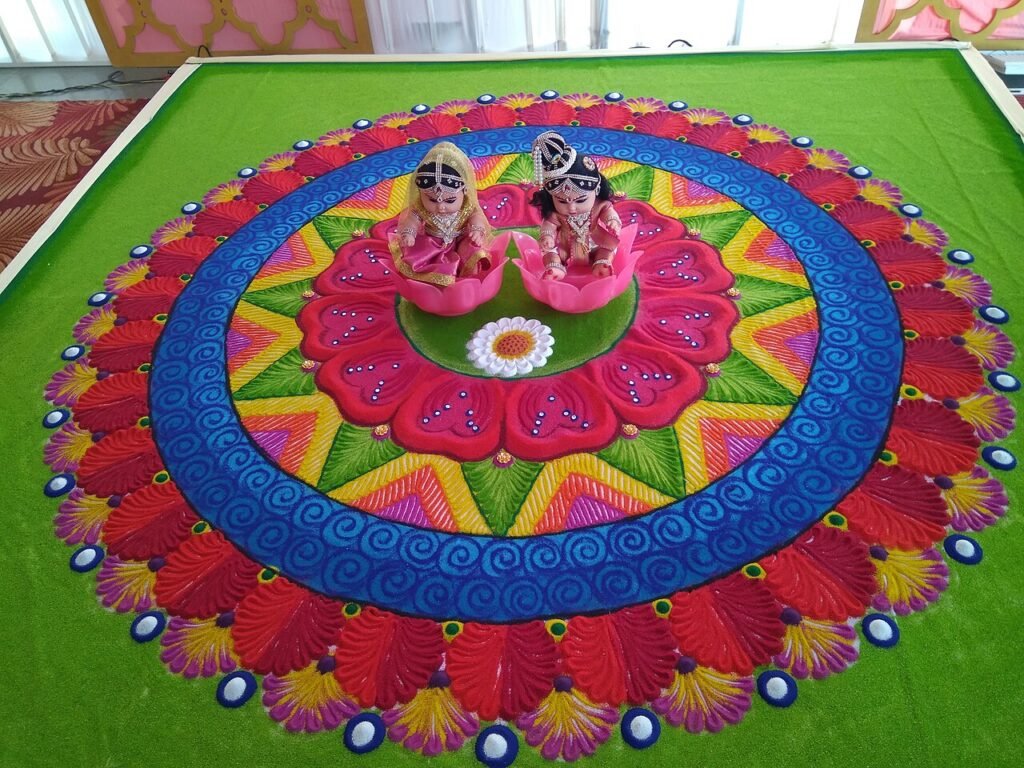
Women and girls wake before sunrise to draw large, intricate muggulu with rice flour in front of their homes. Often they place gobbemmalu, small mounds of cow dung decorated with flowers, pumpkin blossoms, and turmeric, in the middle of the designs. Neighbourhoods sometimes hold friendly muggulu competitions.
Haridasu and Gangireddulu
During the festival season, you may hear the Haridasu singing devotional songs, wearing a copper vessel (akshaya patra) on his head as he walks from house to house to receive rice and offerings. Gangireddulu performers lead beautifully decorated bulls that “dance” and nod their heads to the music of the nadaswaram and drums.
Kites
In many parts of Telangana, especially Hyderabad, the sky fills with colourful kites. Children and adults spend the day on rooftops, calling out cheerfully when they cut an opponent’s kite string.
Day 3: Kanuma (కనుమ)
Kanuma honours cattle, which are vital to farming life. Cows and bullocks are bathed, their horns painted, and they are decorated with bells and garlands. Families offer thanks for their help in the fields. Many families also prepare special feasts on this day.
Day 4: Mukkanuma (ముక్కనుమ)
Some regions celebrate a fourth day, Mukkanuma, with family meals and visits to relatives before the festival season ends.
Traditional Sankranti Foods
Food is at the heart of Sankranti. Popular festival dishes include:
- Ariselu: Sweet fried discs made from rice flour and jaggery, often topped with sesame seeds.
- Chakkilalu / Sakinalu: Crunchy, spiral-shaped savoury snacks made from rice flour; sakinalu are especially popular in Telangana.
- Paramannam / Pongali: Rice cooked with milk and jaggery, offered to the Sun God.
- Nuvvula Undalu: Sesame and jaggery balls, perfect for the winter season.
- Bobbatlu (Polelu): Sweet flatbreads filled with chana dal and jaggery.
- Pulihora: Tangy tamarind rice, a festive essential.
Celebrating Sankranti Abroad
For families outside India, Sankranti can still be meaningful:
- Draw a small muggulu at your front door with chalk or rice flour.
- Do a simple Bhogi Pallu ceremony for young children.
- Cook one traditional sweet together and explain its meaning.
- Fly kites at a local park.
- Read a Sankranti story to your children, such as our tale Chintu and the Lost Kite.
- Attend a community celebration organised by a local Telugu association.
The Meaning Behind the Festival
At its heart, Sankranti is about gratitude: to the sun, to the land, to the animals who help us, and to the family and community who share the harvest. It is a wonderful time to teach children to say thank you for the food on their plates and the people around them.
You May Also Enjoy
- Telugu Food as Philosophy: What Our Cuisine Teaches Us About Life
- Vijayanagara: The Empire That Saved South Indian Civilisation
- The Hidden Curriculum: What Children Learn When No One Is Teaching Them
More: World History & Culture · Stories in 14 languages · Srikaram home
✍️ Have a story or article to share? Submit it for review and get published on Srikaram.org.