
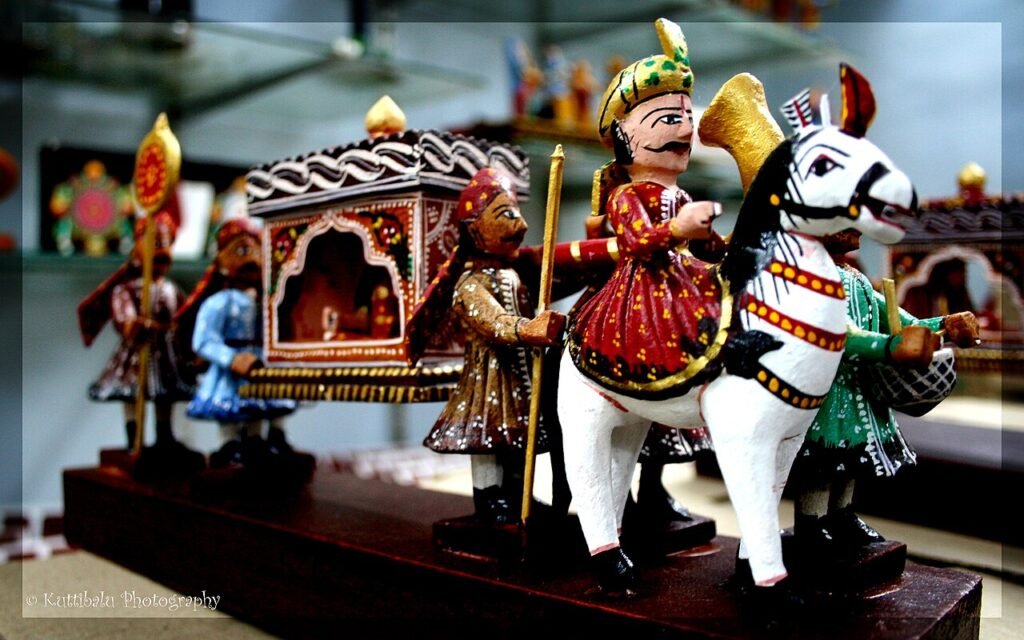
Kondapalli and Etikoppaka Toys: The Traditional Wooden Toys of Andhra Pradesh
Long before plastic toys and video games, children in Andhra Pradesh played with beautiful handmade wooden toys. Two traditions stand out: Kondapalli toys and Etikoppaka toys. Both are celebrated crafts with Geographical Indication (GI) tags, and both are still made by skilled artisan families today.
Kondapalli Toys
Where They Come From Kondapalli is a village near Vijayawada in Andhra Pradesh, famous for its hill fort and its toy-making tradition that goes back several centuries. The artisans’ colony there is often called Bommalollu, meaning the toy-makers’ place.
The Wood Kondapalli toys are carved from a soft, light wood called tella poniki (Givotia moluccana), which grows in the nearby hills. Its softness makes it perfect for carving detailed figures.
How They’re Made 1. The wood is cut and dried. 2. Artisans carve different parts of the figure separately. 3. The parts are joined using a paste made from tamarind seed powder and sawdust. 4. The toys are coated, smoothed, and painted in bright colours.
Popular Designs – Ambari elephants, carrying royal seats on their backs – Dasavatharam sets showing the ten avatars of Vishnu – Village scenes: farmers, bullock carts, palm trees, and women drawing water – Birds, animals, and mythological figures
Kondapalli toys are an essential part of Bommala Koluvu, the doll displays set up in many Telugu homes during Dasara and Sankranti.
Etikoppaka Toys
Where They Come From Etikoppaka is a village on the banks of the Varaha river in the Anakapalli region near Visakhapatnam. Its toy-making tradition is several centuries old.
The Wood and Lacquer Etikoppaka toys are made from the soft wood of the ankudu tree (Wrightia tinctoria). They are turned on a lathe, giving them smooth, rounded shapes, and then coloured with lacquer.
Natural Colours What makes Etikoppaka special is the use of natural dyes made from seeds, bark, roots, and leaves. For example, colours are traditionally derived from sources like turmeric and indigo. The result is safe, eco-friendly toys with a glossy finish.
Popular Designs – Spinning tops (bongaralu) – Rattles, small kitchen sets, and bangle boxes – Bullock carts, dolls, and animals – Decorative items like pen stands and jewellery boxes
Why These Toys Matter
- Eco-friendly: Made from natural wood and, in Etikoppaka’s case, natural dyes.
- Safe for children: Traditional toys avoid harmful plastics.
- Cultural heritage: They preserve stories, village life, and mythology.
- Supporting artisans: Buying handmade toys helps families keep these crafts alive.
Activities for Children
- Set up a mini Bommala Koluvu with traditional toys.
- Try spinning an Etikoppaka top, just like children did generations ago.
- Draw or paint your own design for a Kondapalli toy.
- Learn the Telugu names: bomma (doll/toy), enugu (elephant), bandi (cart).
Final Thoughts
Kondapalli and Etikoppaka toys are more than playthings; they are pieces of Andhra Pradesh’s living heritage. Introducing children to these crafts teaches them to value handmade art, natural materials, and the artisans who keep these traditions alive.
You May Also Enjoy
- Identifying the Dravidian Roots in Modern Global Languages
- The Evolution of Ugadi: How Our Ancestors Calculated the Cosmos
- 5 Hidden Life Lessons in the Bhagavad Gita for Today’s Teenagers
More: World History & Culture · Stories in 14 languages · Srikaram home
✍️ Have a story or article to share? Submit it for review and get published on Srikaram.org.