A strong vocabulary helps children understand what they read, express their ideas clearly, and do better in every school subject. The good news is that vocabulary grows naturally when children are surrounded by words in fun, meaningful ways.
Here are fifteen proven strategies to improve English vocabulary for kids.
1. Read Aloud Every Day
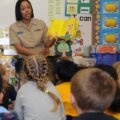
Books contain many words children rarely hear in everyday conversation. Reading aloud, even to older children, exposes them to rich vocabulary like enormous, whisper, curious, and determined.
2. Encourage Independent Reading
Let children choose books they enjoy: stories, comics, magazines, or non-fiction about animals, space, or sports. The more they read, the more words they learn.
3. Talk About New Words
When you come across an unfamiliar word, pause and discuss it: “What do you think exhausted means? Can you think of a time you felt exhausted?”
4. Word of the Day
Pick one interesting word each day. Write it on a board or the fridge, explain it, and challenge everyone to use it in conversation.
5. Use Rich Language Yourself
Instead of “That’s good,” try “That’s fantastic!” or “That’s clever!” Children learn words by hearing adults use them naturally.
6. Play Word Games
- Scrabble Junior or Scrabble
- Boggle
- Word Bingo
- Hangman
- 20 Questions
- I Spy with descriptive words (“I spy something shiny and round”)
7. Explore Synonyms and Antonyms
“Can you think of another word for happy?” (joyful, cheerful, delighted). Opposites work too: brave and cowardly, ancient and modern.
8. Keep a Vocabulary Journal
Children can write new words, their meanings, and a drawing or sentence for each one.
9. Tell Stories Together
Take turns adding sentences to a story. Encourage descriptive words: “The gigantic elephant trudged slowly through the misty forest.”
10. Learn Word Parts
Teach common prefixes and suffixes:
- un- means not (unhappy, unkind)
- re- means again (redo, rewrite)
- -ful means full of (helpful, joyful)
Knowing word parts helps children work out new words on their own.
11. Use Everyday Moments
Name things in the kitchen, market, or park: colander, ladle, stall, canopy. Every outing can become a vocabulary lesson.
12. Watch Quality Shows Together
Documentaries and educational programmes introduce subject-specific words. Discuss new words afterwards.
13. Encourage Writing
Letters, diaries, and short stories give children a chance to use new words.
14. Connect Languages
For bilingual children, compare words across English and Telugu: moon and chandrudu, friend and snehitudu. Understanding concepts in one language helps learning in another.
15. Praise Word Use
When your child uses a new word, notice it: “Magnificent, what a great word to describe that peacock!”
Vocabulary Tips by Age
- Ages 3 to 5: Name everything, read picture books, sing songs.
- Ages 6 to 8: Word of the day, simple word games, early chapter books.
- Ages 9 to 12: Synonyms, word roots, crosswords, independent reading.
Final Thoughts
Vocabulary grows one word at a time, through books, conversations, and play. By making words exciting and part of everyday life, you’ll help your child become a confident reader, writer, and speaker.
You May Also Enjoy
- 10 Telugu Proverbs That Contain More Wisdom Than a Shelf of Self-Help Books
- Pothana’s Bhagavatam: The Poet Who Defied a King for His Devotion
- The Secret Language of Telugu Cinema: How Tollywood Shapes Cultural Identity